
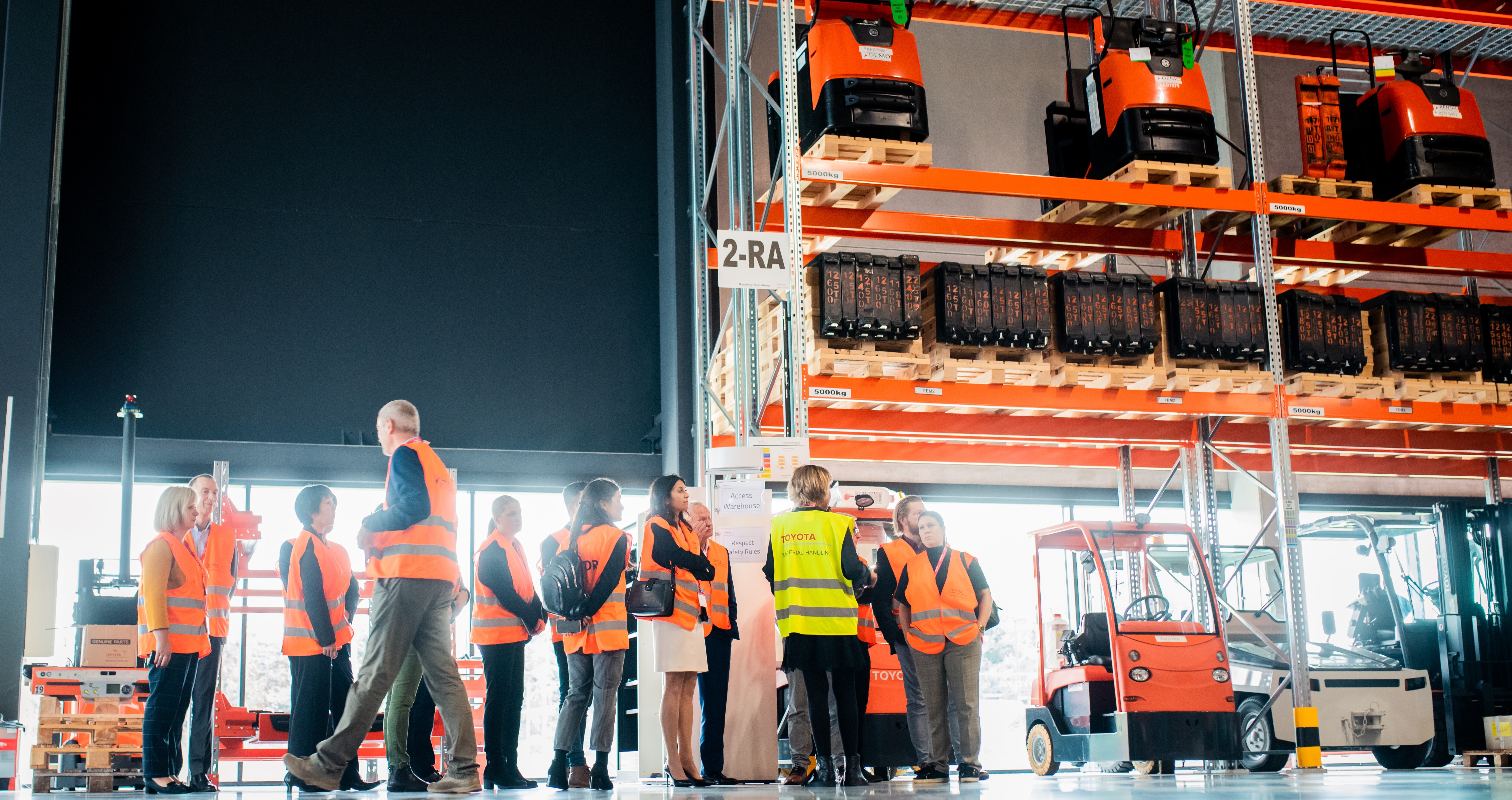
As warehouses become busier and more complex, maintaining a safe working environment can become increasingly challenging. Forklifts, pedestrians and stock are constantly moving through shared spaces, creating potential risks that can be difficult to identify through observation alone.
A Real-Time Location System (RTLS) can provide greater visibility of these movements, helping warehouse operators to operate safely, identify potential hazards and make more informed decisions about safety and track pallet movements.
What is RTLS?
A Real-Time Location System (RTLS) is a technology used to track the location and movement of people, equipment, stock and other assets.
In a warehouse environment, RTLS can provide continuous visibility of where people, pallets and material handling equipment are located and how they move around the facility. This information can then be analysed to identify patterns, potential risks and opportunities to improve warehouse operations.
Rather than relying solely on observations or historical incident data, RTLS provides businesses with a clearer picture of what is happening across their operation in real time.
How does RTLS work?
RTLS works by using vision-based AI technology to determine the location of people, equipment or pallets.
Hardware is installed on the material handling equipment, and a full scan of the building interior is used to create a digital twin. These together enable the exact positioning of the equipment, pedestrians and pallets throughout the warehouse.
The data is collected and analysed by the software. Depending on the solution, this can be used to create heatmaps, analyse warehouse traffic, support near-miss detection, monitor compliance and assist with incident investigations.
This information can help businesses take a more proactive approach to warehouse safety, identifying potential risks and enabling equipment speed limitation and operator alerts before the situation results in an incident.
How can RTLS improve warehouse safety?
RTLS can support warehouse safety by helping identify potential hazards, respond to risks and use data to improve the way their operations are managed.
1- Identify high-risk areas
RTLS can be used to create heatmaps showing where forklifts, pedestrians and other equipment are regularly interacting with each other.
This can highlight areas with particularly high levels of traffic or congestion, high volumes of system interventions avoiding incidents which all help warehouse managers identify where additional safety measures may be required.
2 -Reduce the risk of collisions
In real time, RTLS can identify potential collisions or danger, providing automated speed reduction and driver notification to avoid the identified threat. Helping businesses avoid the incident in the first place and reporting the promote constant improvement reducing risks further in the future.
RTLS solutions use truck mounted cameras to help detect pedestrians and obstacles around the forklift and alert the operator and communicate directly from machine to machine. This enables machines to be aware of a pedestrians presence even with no direct line of sight.
3- Support near-miss detection and incident investigation
Not every safety risk results in an incident. Near misses can provide valuable insight into potential hazards, but identifying them and understanding what happened can be difficult.
RTLS can provide data on proximity events and interactions between people and equipment, helping businesses investigate near misses and identify recurring risks. If an incident does occur, the same data can help provide a clearer picture of what happened.
What should you consider when looking into RTLS?
Before implementing RTLS, you should consider what you would like to track, which safety challenges you are trying to address and how the resulting data will be used.
Other factors to consider include the size and layout of the facility, the number of people and vehicles being tracked, integration with existing systems and the type of alerts or reporting required.
It is also important to view RTLS as part of a wider safety strategy. Technology can provide valuable data and alerts, but it should complement measures such as operator training, pedestrian segregation, traffic management and appropriate warehouse design.
Creating a safer, more connected warehouse
RTLS can give businesses greater visibility of how people, equipment and materials move around their warehouse. By using this information to identify high-risk areas, understand traffic patterns and investigate near misses, businesses can make more informed decisions about safety.
Click below to learn more about how we can support you in developing safer warehouse operations.