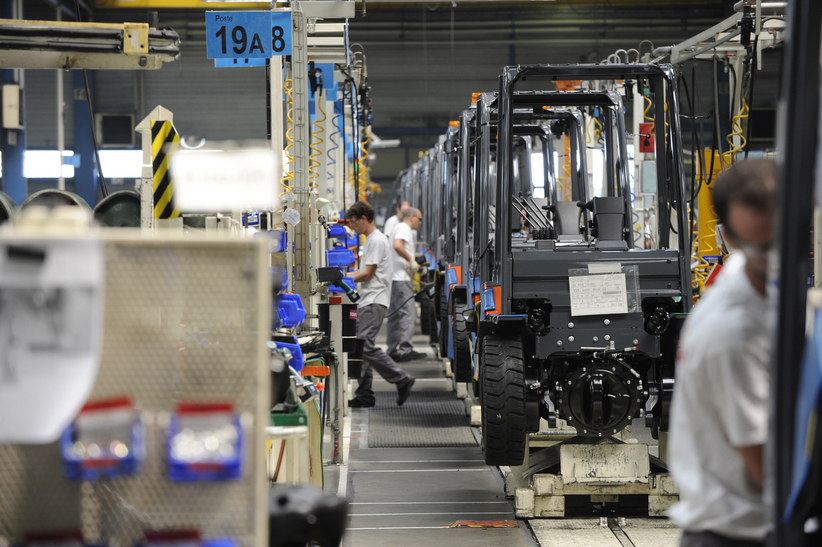
When it comes to achieving operational excellence, efficiency is key. At Toyota Material Handling, our focus is always on ensuring maximum efficiency for our own operations and our customers, we call this Zero Muda, which means Zero Waste.
In lean manufacturing, waste can be defined as anything that does not add value. These ‘wastes’ are defined in the 8 types of waste:
1. Overproduction
Overproduction happens when goods are produced earlier or in higher quantities than your operation needs. In material handling environments, this usually results in pallets sitting in racking or taking up floor space long before they’re required. It also increases forklift activity to move or store items that didn’t need to be produced yet, consuming time, energy, and space without adding value.
The waste:
• Creates excess inventory that must be moved, stored, and managed
• Hides issues such as bottlenecks, quality problems, or inaccurate forecasting
• Adds unnecessary handling and storage, increasing labour time and risk of damage
2. Waiting
Waiting occurs when operators, trucks, goods, or systems are unable to continue to the next step. In operations, this looks like a forklift operator waiting for pallets to be wrapped, or an AGV sitting idle because an aisle is blocked, or instructions aren’t available in time. These delays stall the flow of goods and slow down the entire operation.
The waste:
• Extends lead times and slows customer delivery
• Leaves forklifts, AGVs, pallet trucks underutilised and reduces productivity
3. Transportation
Transportation waste is the unnecessary movement of goods between processes, storage areas, or locations. In material handling environments, this often happens when pallets are stored too far from the next step or when workflows require multiple forklift trips across the warehouse - even though the movement adds no value to the product.
The waste:
• Adds cost and time without contributing to customer value
• Increases the risk of product damage through excessive handling
• Consumes energy - battery, fuel, and operator effort
4. Overprocessing (Excess Processing)
Overprocessing occurs when more work, higher-spec equipment, or extra steps are used than the task requires. In material handling operations, this might look like manually checking every pallet before shipping because there is no digital system. These unnecessary steps drain time and resources.
The waste:
• Uses more time, energy, and resources than necessary
• Increase ergonomic strain from repetitive or avoidable manual tasks
5. Inventory
Inventory waste refers to holding more raw materials, work-in-progress, or finished goods than the operation needs. In material handling, overstocking congests aisles, complicates forklift routes, and hides underlying problems such as inefficiencies or quality issues.
The waste:
• Ties up money that could be invested elsewhere
• Masks defects and process problems within large batches
• Requires extra racking, space, and more material handling activity to manage it
6. Motion
Motion waste is the unnecessary physical movement of operators, such as walking long distances, bending, twisting, or reaching for items and equipment. In operations, this often happens when workstations aren’t ergonomically designed or items aren’t stored in accessible locations.
The waste:
• Increases fatigue and physical strain on operators
• Reduces productivity, particularly in picking and fast-moving environments
7. Defects
Defects include errors, damage, rework, or incorrect documentation that require products or pallets to be repaired, replaced, or processed again. In material handling, this might involve damaged pallets due to poor forklift handling, incorrect labels, or incomplete orders needing re-picking.
The waste:
• Uses extra time and materials
• Causes delays and dissatisfaction from customers
• Requires additional warehouse resources, such as re-checking, re-picking, or re-shipping
8. Under-utilised talent
Under-utilised talent occurs when employees’ skills, knowledge, ideas or experience are not fully used. In material handling, this might involve skilled operators spending too much time on repetitive tasks, employees’ improvement ideas being overlooked, or teams not being given opportunities to develop and apply their expertise.
The waste:
- Misses opportunities to improve processes and productivity
- Reduces employee engagement and limits development
- Keeps skilled people focused on low-value or repetitive tasks
- Means valuable knowledge and improvement ideas are not fully utilised
To find out more about Zero Muda and how we can help you remove waste from your operation, visit our Zero Muda page.